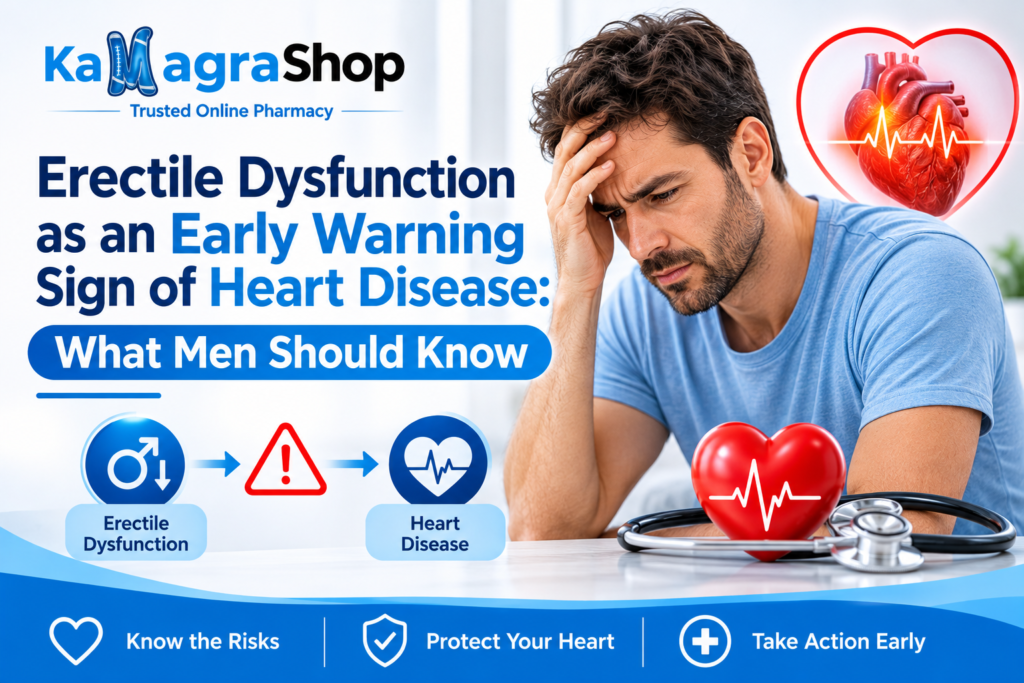
Erectile dysfunction or ED is seen as a condition linked exclusively to the sexual function. But there can be situations when the inability to have an erection may indicate an existing health problem especially pertaining to the heart.
The heart and the blood vessels are crucial for erectile function. If the blood flow is compromised, then the penis will not receive enough blood to sustain an erection. Sometimes erectile dysfunction might be an early sign of cardiovascular disease in some men.
The knowledge of the relationship between erectile dysfunction and heart disease can help men spot possible warning signs and get medical guidance.
What Is the Connection Between Erectile Dysfunction and Heart Disease?
Erection requires healthy blood vessels and nerves as well as effective blood flow.
In the case of stimulation, nervous signals make blood vessels of the penis dilate, which leads to increased blood flow into the erectile tissue.
Cardiovascular disorders have a negative impact on the process as they may result in the damage or inability of blood vessels to perform their functions.
For instance, atherosclerosis involves the buildup of fat inside arteries, resulting in narrowing and limiting the flow of blood through blood vessels.
As erectile function is dependent on circulation, any vascular issues can be a factor that can erectile dysfunction be temporary?
There is scientific evidence indicating that erectile dysfunction is an early sign of cardiovascular disorder, especially when the underlying cause is vascular.
Why Can Erectile Dysfunction Appear Before Heart Disease Symptoms?
There are several reasons why erectile dysfunction can occur before the occurrence of cardiovascular symptoms. One of them is related to the size and functions of blood vessels used.
The arteries feeding the penis are quite small relative to coronary arteries. Any changes in the condition of blood vessels will become evident due to ED before some men feel any symptoms such as pain in the chest.
Nevertheless, it should be noted that all men suffering from ED are not necessarily affected by heart diseases. Erectile dysfunction requires further investigation because it can give men a chance to learn about their cardiovascular risks sooner.
In order to prove the connection between erectile dysfunction and cardiovascular risk, the EAU provides recommendations on cardiovascular evaluation for vascular ED.
6 Cardiovascular Risk Factors That May Contribute to Erectile Dysfunction
Several factors can affect both cardiovascular health and erectile function.
1. High Blood Pressure
High blood pressure might cause damage to the blood vessel lining due to constant exposure.
A reduced elasticity and/or constriction of blood vessels will reduce the flow of blood around the body, which might include the penis.
Certain blood pressure medicines are associated with erectile dysfunction too. Men should consult their health care professional regarding the potential side effects instead of discontinuing the prescribed medicine themselves.
2. High Cholesterol
High blood pressure might cause damage to the blood vessel lining due to constant exposure.
A reduced elasticity and/or constriction of blood vessels will reduce the flow of blood around the body, which might include the penis.
Certain blood pressure medicines are associated with erectile dysfunction too. Men should consult their health care professional regarding the potential side effects instead of discontinuing the prescribed medicine themselves.
3. Diabetes
Diabetes could have an impact on both blood vessels and nerves.
High blood sugar could impair small blood vessels and nerves responsible for erectile function.
As a result, men suffering from diabetes could encounter erectile dysfunction in addition to their cardiovascular risk factors.
4. Smoking
Smoking introduces toxic chemicals into the body that can harm the blood vessels and their functioning.
Moreover, smoking is recognized as a risk factor for heart diseases.
Quitting smoking will improve overall heart health and might be helpful in eliminating one cause of ED.
5. Obesity and Physical Inactivity
Extra body weight and inactivity are risk factors for many problems which may be detrimental to your heart and sexual functions.
High blood pressure, insulin resistance, type 2 diabetes, and cholesterol abnormalities are examples of such problems.
Physical activities and proper body weight control help maintain cardiovascular and metabolic health.
6. Chronic Stress
Long-term stress can affect sleep, mood, hormonal regulation and sexual function.
Stress may contribute to erectile difficulties through psychological and physiological pathways.
It is important to recognize that ED can have several overlapping causes, and not every case is related to cardiovascular disease.
When Should Men Consider a Cardiovascular Health Check?
Men should consider speaking with a healthcare professional if they experience:
- Persistent or recurring erectile difficulties.
- Erectile dysfunction without an obvious explanation.
- ED alongside high blood pressure or elevated cholesterol.
- Erectile difficulties alongside diabetes or obesity.
- A personal or family history of cardiovascular disease.
- Reduced exercise tolerance or unusual breathlessness.
An individual from the healthcare profession could evaluate the medical background, lifestyle and current symptoms in order to assess if a cardiovascular evaluation is required.
It is unwise for men to think that erectile dysfunction is a natural aging process especially when it occurs without warning.
What Tests May Help Identify Cardiovascular Risk?
A healthcare professional may recommend several assessments depending on individual symptoms and risk factors.
Blood pressure measurement: Helps identify hypertension, which can affect vascular health.
Cholesterol testing: Measures blood lipid levels and helps assess cardiovascular risk.
Blood glucose testing: Can identify diabetes or problems with blood sugar regulation.
Medical and family history: Helps identify existing conditions, medication use and inherited cardiovascular risk factors.
Cardiovascular risk assessment: A clinician may use established risk-assessment tools to estimate the likelihood of future cardiovascular events.
In selected cases, additional investigations may be appropriate. These could include an electrocardiogram, exercise testing or coronary artery calcium assessment.
Not every man with ED needs every test. Investigations should be guided by individual clinical circumstances.
Can Improving Heart Health Help Erectile Function?
Addressing cardiovascular risk factors may also support erectile health.
Although lifestyle changes cannot guarantee that erectile dysfunction will resolve, they can improve general health and help manage some contributing factors.
Consider the following habits:
- Exercise regularly: Physical activity supports circulation, cardiovascular fitness and metabolic health.
- Eat a balanced diet: Choose vegetables, fruits, whole grains, legumes and other nutrient-rich foods.
- Maintain a healthy weight: Sustainable weight management can help reduce certain cardiovascular risk factors.
- Avoid smoking: Smoking cessation supports blood vessel health.
- Limit alcohol: Excessive alcohol consumption can contribute to sexual difficulties and other health problems.
- Prioritize sleep: Consistent, sufficient sleep supports general physical and metabolic health.
- Manage stress: Relaxation techniques and appropriate professional support may help improve psychological well-being.
These measures are useful components of overall health management, but they should not replace medical evaluation or prescribed treatment.
Are Erectile Dysfunction Medications Safe for Men With Heart Conditions?
Certain drugs prescribed to manage erectile dysfunction fall into a classification known as phosphodiesterase type 5 inhibitors (PDE5 inhibitors).
Sildenafil and tadalafil are examples of drugs that belong to this class of drugs. They help enhance the erectile response to sexual stimulation by promoting the effect of nitric oxide and relaxation of the smooth muscle tissue of the penis.
However, suitability for use in treating ED is based on the cardiovascular condition of a person as well as his/her general health status.
One of the most critical safety issues related to the use of PDE5 inhibitors is their combination with nitrate drugs.
The use of PDE5 inhibitors together with nitrates causes dangerously low blood pressure. PDE5 inhibitors should never be used simultaneously with nitrates.
Individuals who take nitrates for chest pains or other interacting ED drugs need to consult a healthcare professional to discuss possible ways of managing ED.
Individuals with unstable cardiovascular conditions or signs of discomfort during exercise should get appropriate medical evaluation before engaging in sexual activities and use of ED drugs.
Frequently Asked Questions
Can erectile dysfunction be an early sign of heart disease?
Yes. Erectile dysfunction can sometimes be an early indicator of vascular problems associated with cardiovascular disease. However, ED has several possible causes and does not automatically mean that someone has heart disease.
How many years before heart disease can erectile dysfunction appear?
In some men, erectile difficulties may appear several years before clinically noticeable cardiovascular disease. The timing varies considerably, and there is no reliable timeline that applies to everyone.
Does poor blood circulation cause erectile dysfunction?
Yes. Insufficient blood flow can make it difficult to achieve or maintain an erection. Vascular conditions, including atherosclerosis, can contribute to this problem.
Can erectile dysfunction be reversed by improving heart health?
In some cases, addressing cardiovascular risk factors may improve erectile function. Results depend on the underlying cause, the severity of vascular changes and other health conditions.
Should younger men worry about erectile dysfunction?
Persistent or unexplained erectile difficulties should not be ignored at any age. Although cardiovascular risk generally increases with age, younger men can also experience vascular and metabolic health problems.
Can men with heart disease take sildenafil?
Some men with stable cardiovascular conditions may be suitable candidates for sildenafil, but this requires individual medical assessment. Sildenafil must not be combined with nitrate medications because of the risk of a dangerous blood pressure drop.
Conclusion
Erectile dysfunction is not always an isolated sexual health concern. In some men, it may be an early indication of changes in blood vessel function and cardiovascular health.
Understanding the connection between erectile dysfunction and heart disease can encourage earlier medical assessment and better management of underlying risk factors.
If erectile difficulties persist, consider discussing them with a healthcare professional. Addressing blood pressure, cholesterol, diabetes, smoking and other cardiovascular risk factors can support both long-term health and sexual well-being.
Disclaimer: This article is intended for general educational purposes and does not replace professional medical advice, diagnosis or treatment. Consult a qualified healthcare professional about persistent erectile difficulties, cardiovascular symptoms or the suitability of any medication.