What Does the Weekend Pill Mean?
- Dr. Fenil
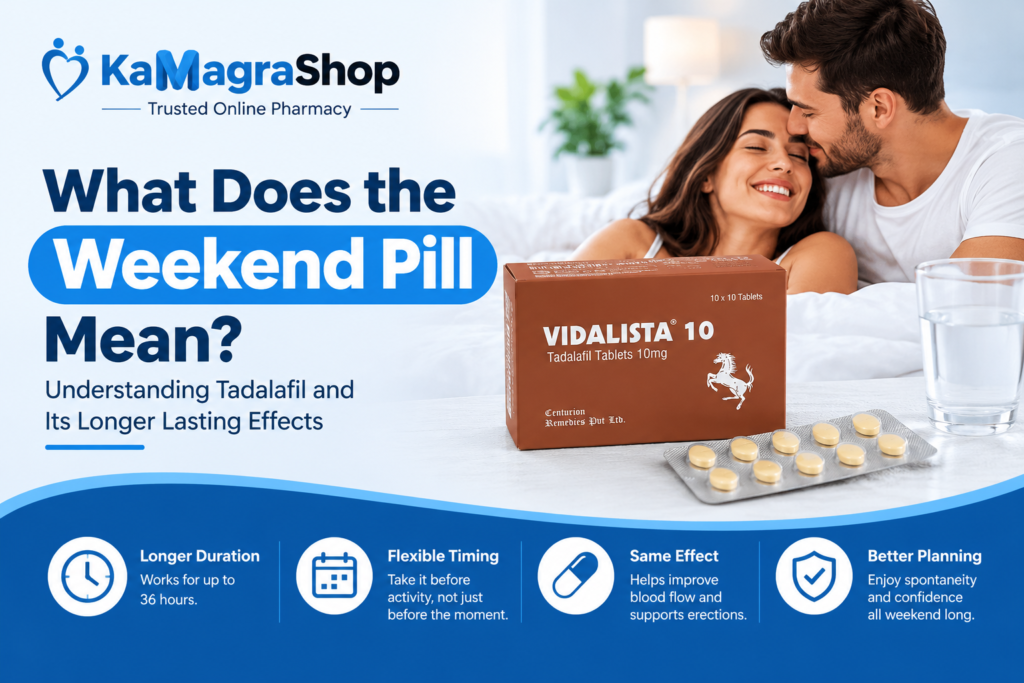
Weekend pill is a popular name for tadalafil, which is prescribed for the treatment of ED. It is called a weekend pill due to the longer duration of tadalafil’s activity in comparison with Tadalafil and other PDE5 inhibitors.
However, “weekend pill” does not imply that taking one pill will lead to a lasting erection all weekend. Actually, tadalafil has the ability to remain active in the organism for a long period of time, which allows responding to sexual arousal.
Knowing the true meaning of this term can prevent misunderstandings regarding the mechanism of tadalafil’s functioning, its duration of action, and application.
Why Is Tadalafil Called the Weekend Pill?
Tadalafil is a PDE5 inhibitor, and it acts by increasing the flow of blood to the penis whenever there is sexual arousal.
The effectiveness of tadalafil lasts much longer compared to other common ED drugs. In this case, it means that the drug can have effects for up to 36 hours after taking it, and this is what made it become popular as the weekend pill.
What is important to note here is that the 36 hours do not imply continuous maintenance of an erection.
This implies that, within that period, one can get and maintain an erection whenever there is sexual arousal.
Does the Weekend Pill Really Last All Weekend?
Not really.
The term “weekend pill” is more of a colloquial expression of the drug’s action time rather than an exact definition of it.
Tadalafil can work up to 36 hours, but there are differences in the results of its usage depending on some factors like dose, health problems, medications, individual reaction, and others.
It means that if a person uses the drug on Friday, it doesn’t guarantee him an erection all weekend long.
Sexual arousal is required in order to achieve an erection.
How Does Tadalafil Work?
Tadalafil inhibits an enzyme called phosphodiesterase 5 (PDE5).
When there is sexual stimulation, the body releases nitric oxide that causes cyclic guanosine monophosphate (cGMP) to be produced. This causes the relaxation of blood vessels and increases blood flow into the penis.
Phosphodiesterase 5 degrades cGMP. By blocking the enzyme, tadalafil allows the signalling process to continue for penile blood flow.
This is the reason why tadalafil will not cause an erection just by the ingestion of the tablet alone; sexual stimulation is needed.
How Long Does Tadalafil Take to Work?
Tadalafil is not always guaranteed to take effect right away when swallowed as a tablet.
In most cases, however, it starts working after about half an hour, though this may differ from person to person.
Its relatively long period of action is what makes it stand out from other ED medications.
Instead of relying on the act of intercourse being carried out only during a specific timeframe, Tadalafil gives you more time for sexual stimulation.
“36 Hours” Does Not Mean a 36-Hour Erection
It is one of the major misconceptions related to the weekend pill.
“Up to 36 hours” means that this is the time period during which the action of tadalafil will help you maintain erectile function. This does not imply that the erection will have to last for 36 hours.
If your erection persists for more than 4 hours, it means a medical emergency.
Please do not take additional doses only because the desired result has not been achieved.
Can You Take Tadalafil Every Day?
It should be noted that tadalafil can be prescribed to individuals in various dosing options depending on their condition.
In case some men have ED, a doctor may prescribe an on-demand dosage of tadalafil. Moreover, low-dosage daily use may also be prescribed in certain cases.
These are two distinct ways of using the medication, and an increased dose does not always guarantee the better effect.
The correct dose is selected considering the patient’s health, medications he takes, kidneys or liver conditions, and frequency of treatment.
Always follow the dosing instructions provided by a qualified healthcare professional or the medicine’s official information.
What Can Affect How Tadalafil Works?
There are some possible reactions to tadalafil.
These may include:
- The dose that is prescribed
- When the dose is taken
- Sexual excitement
- Drinking alcohol
- Other medications
- The state of heart and blood vessels
- Diabetes and other diseases
- Anxiety, stress, and relationship issues
- Problems with kidneys or liver
ED may be caused by some underlying health issues. In some cases, erectile dysfunction is related to cardiovascular disorders, diabetes, hormone imbalance, or some other diseases.
Therefore, ED should not always be considered only as a sexual dysfunction.
Can Alcohol Be Taken With the Weekend Pill?
High levels of alcohol consumption could make it difficult to have an erection, and the likelihood of getting dizzy or experiencing a sudden fall in blood pressure levels may be high when taking tadalafil.
Therefore, moderation should be considered.
This is especially true for people who consume high amounts of alcohol or take drugs that affect blood pressure.
Who Should Not Take Tadalafil?
Tadalafil may not suit everyone.
In particular, tadalafil should never be used alongside nitrate drugs, which are often used to treat some forms of heart diseases. Taking tadalafil with nitrate can lead to very low blood pressure levels.
It is equally important that one informs the doctor of all other medications and existing health issues before taking tadalafil.
This should especially be done when someone has cardiovascular disease, high or low blood pressure, kidney/liver disease, or some specific eye/blood disorder.
Common Side Effects
Side effects can occur when using tadalafil like any other medicine.
The side effects that may occur include the following:
- Headache
- Indigestion
- Backache
- Body aches
- Flushed skin
- Sore throat and runny nose
All these side effects are temporary, but if the patient suffers from a severe side effect, they should see a doctor.
These signs include chest pain, sudden loss of sight or hearing, allergy symptoms, and prolonged erection.
Weekend Pill vs. Shorter-Acting ED Medicines
This is mainly attributed to the period of action of each of these two drugs.
Tadalafil is noted to be effective for a longer period than the other PDE5 inhibitors.Tadalafil and sildenafil have different durations, dosing considerations, and characteristics, but neither medication is automatically better for everyone.
However, this doesn’t mean that one medication is superior to the other; the medication that suits a patient best can only be identified based on their medical history, among other factors.
Key Takeaway: What Does “Weekend Pill” Actually Mean?
“Weekend pill” is just a slang term used in connection with tadalafil since the effects of tadalafil can persist for approximately 36 hours.
Tadalafil doesn’t induce constant erections; taking tadalafil means that a single dose cannot give you an erection throughout the whole weekend.
Tadalafil acts by facilitating a natural response of your body to sexual stimulation. The longer-lasting effect of tadalafil in comparison with some other drugs for erectile dysfunction may allow men to be more flexible about the time of sexual intercourse.
If you have persistent problems with ED, consult your healthcare provider to find out the cause of this problem and choose proper treatment.
Learn more about : Can ED be temporary?
Frequently Asked Questions
1.What is the “weekend pill”?
The “weekend pill” is a common nickname for tadalafil, a PDE5 inhibitor used to treat erectile dysfunction (ED). The name refers to tadalafil’s relatively long duration of action, which can last up to 36 hours in some people.
2.Does the weekend pill really last for 36 hours?
Tadalafil can remain effective for up to 36 hours, but this does not mean that an erection lasts for 36 hours. Sexual stimulation is still required to achieve an erection.
3.Does tadalafil cause an erection all weekend?
No,Tadalafil does not cause a continuous erection. It helps improve erectile function when sexual stimulation occurs during the period in which the medicine is active.
4.How quickly does tadalafil start working?
Tadalafil may start working within about 30 minutes, although the time can vary between individuals. It should be taken according to the dosing instructions provided by a healthcare professional or the medicine’s official information.
5.Can tadalafil be taken every day?
Tadalafil can be prescribed for daily use at a lower dose in some circumstances. On-demand tadalafil and daily tadalafil are different treatment regimens, so the appropriate option and dose should be determined by a healthcare professional.
6.Can you drink alcohol while taking tadalafil?
Large amounts of alcohol can increase the risk of dizziness and low blood pressure and may also make it more difficult to achieve an erection. Heavy alcohol consumption should therefore be avoided when using tadalafil.
7.What should you not take with tadalafil?
Tadalafil must not be taken with nitrate medicines because the combination can cause a potentially dangerous drop in blood pressure. Tell your healthcare professional about all medicines and health conditions before using tadalafil.
8.Is tadalafil better than sildenafil?
Neither tadalafil nor sildenafil is automatically better for everyone. They have different durations of action, dosing considerations, and characteristics. The most appropriate treatment depends on individual health circumstances and medical advice.
9.Is a 36-hour erection a normal effect of tadalafil?
No, A continuous erection lasting more than 4 hours is a medical emergency and requires immediate medical attention. The “up to 36 hours” description refers to the period during which tadalafil may support erectile function in response to sexual stimulation, not to a continuous erection.
10.Can tadalafil treat the underlying cause of erectile dysfunction?
Tadalafil can help manage erectile dysfunction, but it does not necessarily treat the underlying cause. ED can be associated with conditions such as cardiovascular disease, diabetes, hormonal problems, certain medicines, anxiety, and other factors. Persistent ED should be discussed with a healthcare professional.